
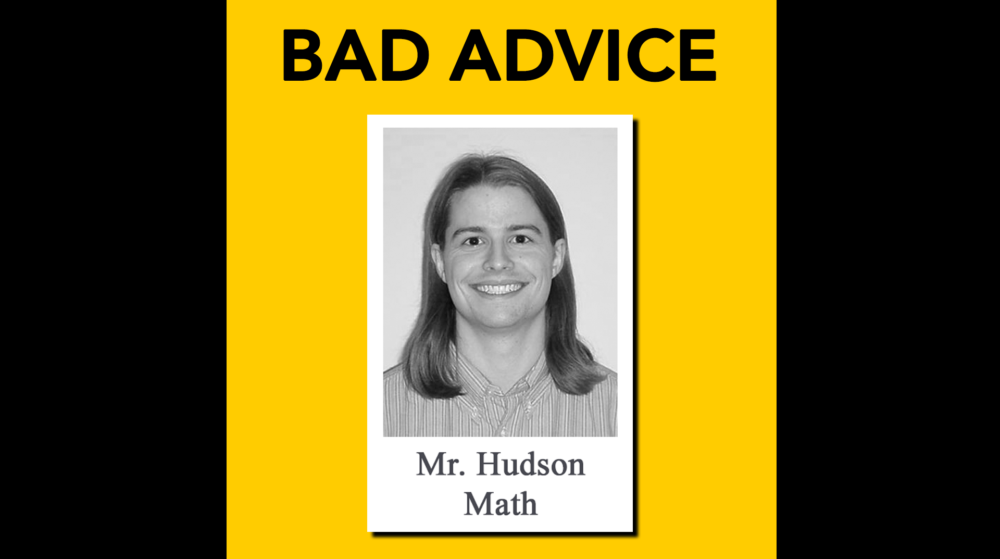
“Don’t say anything during department meetings until second semester because you’re new.”
I received this well-intentioned advice as I was about to start my first year as a high school math teacher. It was grounded in the belief that there was a lot I needed to learn, so I should have patience and discretion.
But that doesn’t make it good advice. And for years I’ve used this advice as an example of what NOT to do.
Every class period in every school is a gathering – a meeting. Which means K-12 schools might give the business world a run for their money in terms of sheer number of annual meetings. So as the new school year gets underway, it’s a great time to remind yourself – no matter your role, business, or context – of how everyone’s identities inform how they engage with others at in-person gatherings.
This bad advice was based on my identity. It was advice for a “new teacher.” Emphasis on the “new.”
And I didn’t heed it at all. I tried. Really. And I failed. Almost immediately.
Sitting down at my first math department meeting, where I was one of 18 teachers, I told myself,
“Trust the advice. Just listen. No need to chime in. Answer questions if you’re asked. Get a lay of the land. It’s just a first meeting.”
That worked until a bad idea was brought up. A really bad idea.
Apparently, the prior school year, too many students weren’t bringing pencils to math class. They were doing math in… pen.
To solve this problem, a suggestion was made to set up a “checkpoint” at the entrance to the math hallway and require students to show their pencil to be allowed into the hallway for class.
Questions were raised (not by me):
- What if they don’t have a pencil? Send them back to their locker or the school store to buy one.
- Won’t that make them tardy? Yes. But consequences will teach them to remember their pencils.
- Who will work the checkpoint? We’ll have a rotating schedule to take turns based on our planning period.
I raised my hand, even though the conversation had been free-flowing and no one else was raising their hand. I don’t remember exactly what I said, but it was something like, “I don’t really care if they use pen. Seeing their incorrect work and mistakes helps me understand how to help them.”
I ignored the advice because I decided to focus on my identity as a “teacher” first, and “new” second.
I had planned to be a high school math teacher for the next 30 years, possibly at that same school. So, I had a legitimate interest in creating the long-term culture I’d be working in, regardless of my present tenure there. And I wanted students to always feel welcome and like they belong in the math wing.
In retrospect, I also could’ve said, “I don’t think we should expect every student will have money to go buy a pencil,” or “I don’t think tardies will change their behavior,” or “I have extra pencils they can check out from me while they’re in my class,” or “Why would we give students who already hate math another reason to hate it?”
That last one matters most for our work here at Gathering Points. If students don’t feel like they’re a “math person” or “good at math,” then the worst thing teachers can do is reinforce that negative identity.
The real lessons students would be learning were, “Math people only use pencils” or “Math people don’t ever forget their pencil.” Neither of those are true. Mathematicians can be just as forgetful as everyone else. They may be even above-average in forgetting (didn’t Einstein always forget to wear socks?).
The same dynamic plays out far beyond a classroom.
If members of your team don’t really feel like they’re a contributor or meaningful part of the team, the worst thing leaders and teammates can do is reinforce that negative identity.
To avoid that outcome, leaders, meeting-makers, and meeting-attenders (i.e., everyone) can use these three tactics:
- Don’t create artificial barriers to belonging. Look for solutions that are welcoming, like having extra pencils in the room.
- If you want people’s best work, affirm their identity. Make sure your policies and practices don’t quietly send the message that certain people, or certain ways of being, aren’t welcome.
- Understand we all have multiple identities, and depending on the context, one identity will take priority over another. Like how “teacher” outweighed “new” for me that day.
In the next issue…
I’ll share the BEST advice I got as a new teacher. It relates to that third lesson above. We need to consider how the multiple identities we all have influence how we engage during in-person gatherings. People are multi-faceted just like communities, and achieving our collective goals requires understanding and supporting each other.
Have a gathering that went surprisingly well — or one that taught you something the hard way? We’re always looking for stories and voices to feature in Gathering Points. Reach out any time.
Get the next issue of Gathering Points.